
Turkey tail mushroom for dogs – Natural immune support that does more
In the world of natural immune support, few ingredients can support your dog’s health as broadly as Turkey tail mushroom. This medicinal mushroom, also known as Trametes versicolor, not only activates the immune system, but a growing body of scientific evidence also suggests that it may play a role in complementary cancer support, easing inflammatory conditions, and supporting gut health. But what makes Turkey tail mushroom so effective for dogs, and how can you use it to support your dog’s health?

Where does Turkey tail mushroom come from and what does it contain?
-
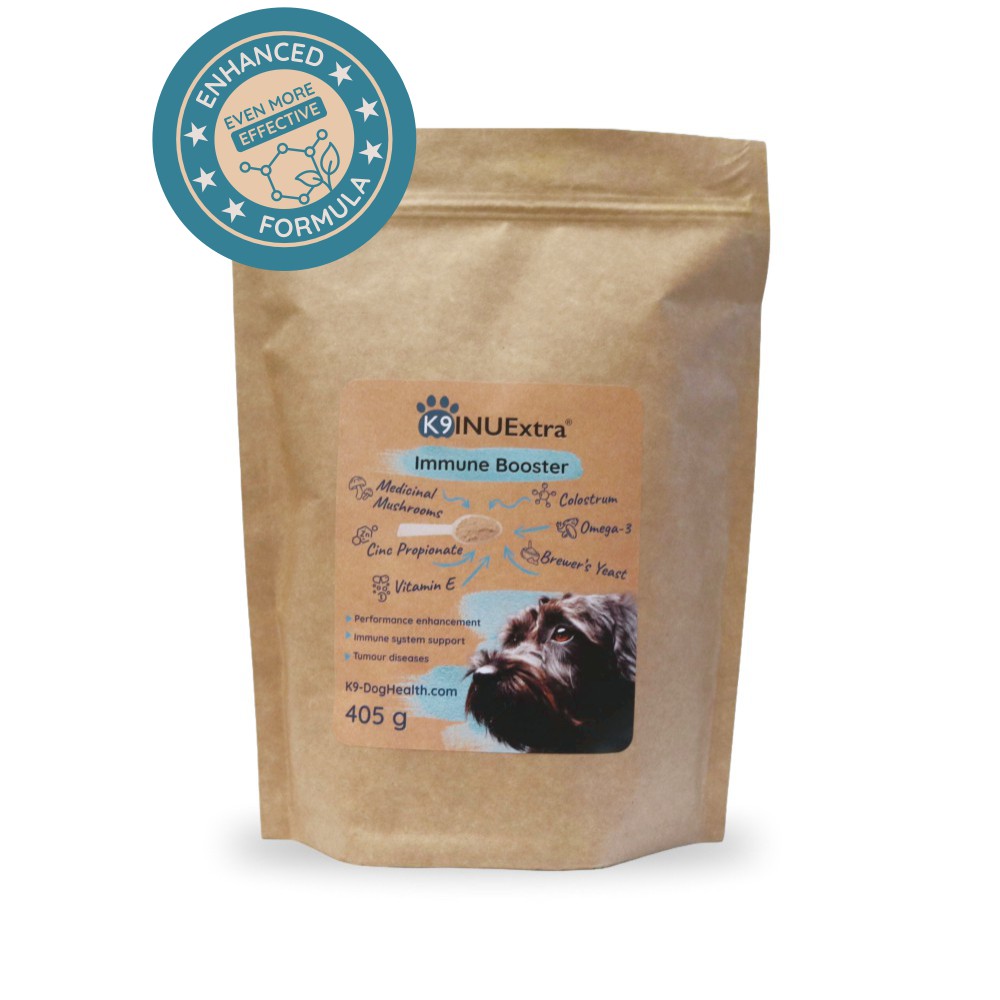

K9 INUExtra®
- Premium immune support with medicinal mushrooms and colostrum
- Anti-inflammatory support with curcumin, omega-3 and BioPerine
- Stronger gut flora and improved digestion with brewer’s yeast and targeted prebiotics
- Antioxidant cellular protection with vitamin E, zinc and natural active compounds
€64,93 (ex.VAT)


The Turkey tail mushroom (Trametes versicolor) is a visually striking mushroom found all over the world. Its colorful, concentric bands truly resemble the wing of a butterfly. For centuries, traditional Asian medicine has used Turkey tail mushroom under the name Yun Zhi to support and strengthen the immune system.
Today, modern scientific research has also taken notice of it – especially because of the polysaccharides it contains, such as PSP and PSK, which have immunomodulating and anti-tumor effects.
Scientific evidence – more than just theory
A 2012 clinical study treated dogs with hemangiosarcoma using PSK extract. The results showed that average survival time increased from 86 days to 199 days. This breakthrough demonstrated that Turkey tail mushroom for dogs offers not only supportive value, but real therapeutic potential as well.
The mushroom’s effectiveness has since been supported by several animal studies and in vitro investigations.
Source: Brown DC et al. (2012) – The use of a mushroom polysaccharide in dogs with hemangiosarcoma, Evidence-Based Complementary and Alternative Medicine.
How can Turkey tail mushroom be used in dogs?
Turkey tail mushroom for dogs may be useful in a wide range of health conditions, from cancer and chronic inflammatory problems to general immune support. It may also help reduce symptoms and support faster recovery in respiratory and urinary tract inflammation, as well as in allergic skin conditions.
Which conditions may Turkey tail mushroom help with in dogs?
Turkey tail mushroom for senior dogs – vitality and quality of life
International experience and research suggest that Turkey tail mushroom may also help senior dogs. It does not only affect the immune system – it may also improve energy levels, appetite, and willingness to move. This can be especially useful in older dogs that do not have a specific illness, but are clearly losing strength.
Adaptogenic effect – the balance between stress and the immune system

This may be particularly important in weakened, older, or chronically ill dogs, as well as in situations where the body is under increased strain – for example during prolonged inflammation, infection, or post-surgical recovery. The adaptogenic effect may help reduce the harmful impact of stress hormones such as cortisol and support the body’s defensive and restorative mechanisms.
Immunomodulating – not just a booster


Many people think the immune system should always be boosted. In reality, it is more complex than that. Turkey tail mushroom does not overstimulate the immune system – instead, it helps regulate how it functions. If immune function is weak, for example in dogs prone to infections or dealing with cancer, it provides support. If immune activity is excessive, as in allergies or autoimmune conditions, it helps calm it. This is what is known as an immunomodulating effect.
Why is gut flora so important for the immune system?
More than 70% of a dog’s immune system is linked to the gut. Turkey tail mushroom for dogs acts as a natural prebiotic and helps beneficial bacteria grow. It supports digestion and strengthens the immune response. When gut flora stays balanced, the body defends itself more effectively against infections and inflammation – which makes Turkey tail especially valuable for long-term use.
What makes Aloha Medicinals mushrooms different?
Not every mushroom extract is the same. The patented Full Spectrum MycoProduct™ process developed by U.S. manufacturer Aloha Medicinals preserves not only the fruiting body of the mushroom, but also the mycelium, extracellular compounds, and the full active profile. This means the final product is rich not only in polysaccharides, but also contains additional bioactive compounds that work together in synergy on the immune system. If you want to understand how medicinal mushroom products differ, read our article about how medicinal mushrooms are produced.
Summary: when is Turkey tail mushroom for dogs worth using?
Use Turkey tail mushroom for dogs when your dog gets sick often, struggles with recurring infections, inflammation, or skin problems, or needs support during cancer care. It also supports recovery after antibiotic treatment, strengthens immune function, and helps older or allergic dogs.
Related medicinal mushrooms for dogs – natural support for health
Alongside Turkey tail mushroom, several other medicinal mushrooms for dogs also offer outstanding health-supporting benefits. These mushrooms, thanks to their various bioactive compounds – such as beta-glucans, triterpenes, and antioxidant polysaccharides – may support cellular regeneration, immune balance, and overall vitality. If you want to explore which other medicinal mushrooms may support your dog’s body, these are also worth knowing:
- Reishi (Ganoderma lucidum) – the king of medicinal mushrooms, known for strong immunomodulating, liver-supporting, and anti-inflammatory effects
- Lion’s mane (Hericium erinaceus) – a medicinal mushroom that may support nervous system regeneration and digestion
- Cordyceps – a natural energy-supporting mushroom with benefits for respiratory health and metabolism
- Agaricus blazei Murill – a medicinal mushroom with immunomodulating and anti-tumor potential
- Shiitake (Lentinula edodes) – a mushroom with antioxidant properties that may support healthy cholesterol levels and cardiovascular health
- Maitake (Grifola frondosa) – a mushroom that may support metabolic balance and healthy blood sugar regulation
These functional mushrooms work together and support your dog’s internal balance. While Reishi provides strong immunomodulating and liver-supporting effects, Lion’s mane supports nervous system regeneration and digestive health. Combining multiple medicinal mushrooms creates gentle, natural, long-term support for your dog’s health and resilience.
Below, we have collected the most common questions dog owners ask about Turkey tail mushroom for dogs, so you can quickly find clear and easy-to-understand answers to the most important points.
Frequently asked questions about Turkey tail mushroom for dogs
❓ What is Turkey tail mushroom for dogs used for?
Turkey tail mushroom for dogs is mainly used to support the immune system, help reduce inflammation, and promote gut balance. It may be especially helpful in dogs with cancer, chronic inflammation, and weakened overall condition, as a natural complementary option.
❓ Can Turkey tail mushroom be given to a dog with cancer?
Yes. Turkey tail mushroom can naturally support dogs with cancer. Its immunomodulating effect may help improve quality of life, but it does not replace veterinary treatment. Use it as a complementary part of the overall care plan.
❓ Which conditions may Turkey tail mushroom help with in dogs?
Turkey tail mushroom for dogs may be useful in cancer, chronic inflammation, allergic symptoms, and recurring infections. It may also support recovery after antibiotic treatment and help strengthen the body’s natural defenses.
❓ Can Turkey tail mushroom help dogs with allergies?
Yes. Because Turkey tail mushroom does not simply strengthen the immune system but also regulates how it functions, it may help in allergic reactions as well. It may support the body by calming excessive immune response, for example in cases of itchy or inflamed skin.
❓ Is Turkey tail mushroom a good choice for senior dogs?
Turkey tail mushroom for senior dogs may be particularly valuable because it can support energy levels, immune function, and overall vitality. It may also help older dogs stay more active and resilient as they age.
❓ Can Turkey tail mushroom for dogs be used long term?
Turkey tail mushroom is often used long term as a natural support for balanced immune function. However, the exact duration and dose should always depend on the dog’s condition, so it is wise to discuss long-term use with your veterinarian.
❓ Does Turkey tail mushroom replace veterinary treatment?
No. Turkey tail mushroom for dogs is a natural complementary support, but it does not replace diagnosis or treatment. The best results are usually achieved when it is used as part of the veterinary treatment plan, as a complementary option.
Recommended:
If your dog scratches often, has digestive problems, or shows unusual skin symptoms, it is worth reading about what you can do in cases of food allergy or skin allergy. It also matters how you support the body from within. Krill oil, for example, is an excellent natural anti-inflammatory option. For older dogs, an effective immune-support product can help them stay more active and healthier. If you notice behavioral changes or confusion, look into the signs of cognitive decline and what may help slow it down. We have also put together a guide to medicinal mushroom products that may help support your dog’s health naturally.
Important: This article is for informational purposes only and does not replace veterinary examination or treatment. For an accurate diagnosis and appropriate therapy, always consult your veterinarian.
References:
- Brown et al. (2012): The use of a mushroom polysaccharide in dogs with hemangiosarcoma
- University of Pennsylvania (2012): Compound Derived from Mushroom Lengthens Survival Time in Dogs With Cancer
- Elmslie et al. (2022): Polysaccharopeptide in canine hemangiosarcoma
- Wasser (2011): Medicinal mushrooms as a source of antitumor and immunomodulating polysaccharides


