
Medicinal mushrooms for dogs – What are they good for?
Medicinal mushrooms are mentioned more and more as natural supplements for dogs. This often happens when pet parents want to support their dog’s immune system without overusing medications. It is no surprise that interest in medicinal mushroom extracts has grown strongly in recent years.
At the same time, clarity matters. This topic includes many exaggerated or misleading claims. While some medicinal mushrooms may help support immune function, they are not miracle cures. They also do not replace a veterinary diagnosis or treatment.
In this article, we bring order to the noise. We show what you can realistically expect from medicinal mushrooms for dogs, which statements research supports, and what you should watch closely if you plan to give medicinal mushrooms to your dog.

What counts as a medicinal mushroom, and why do people use them in dogs?
The term medicinal mushroom usually refers to edible or traditionally used mushrooms in which researchers have identified immunologically active compounds. These include polysaccharides (especially beta-glucans), certain triterpenes, and other bioactive components. These are the compounds that make medicinal mushrooms for dogs relevant as supplements.
The typical goals of using medicinal mushrooms in dogs:
- immune support (general condition, senior age, recovery),
- complementary use only alongside cancer care,
- supporting the gut and microbiome (through certain fibers and beta-glucans),
- antioxidant support in certain high-stress situations.
Medicinal mushrooms for dogs – what does immunomodulating effect actually mean?
-
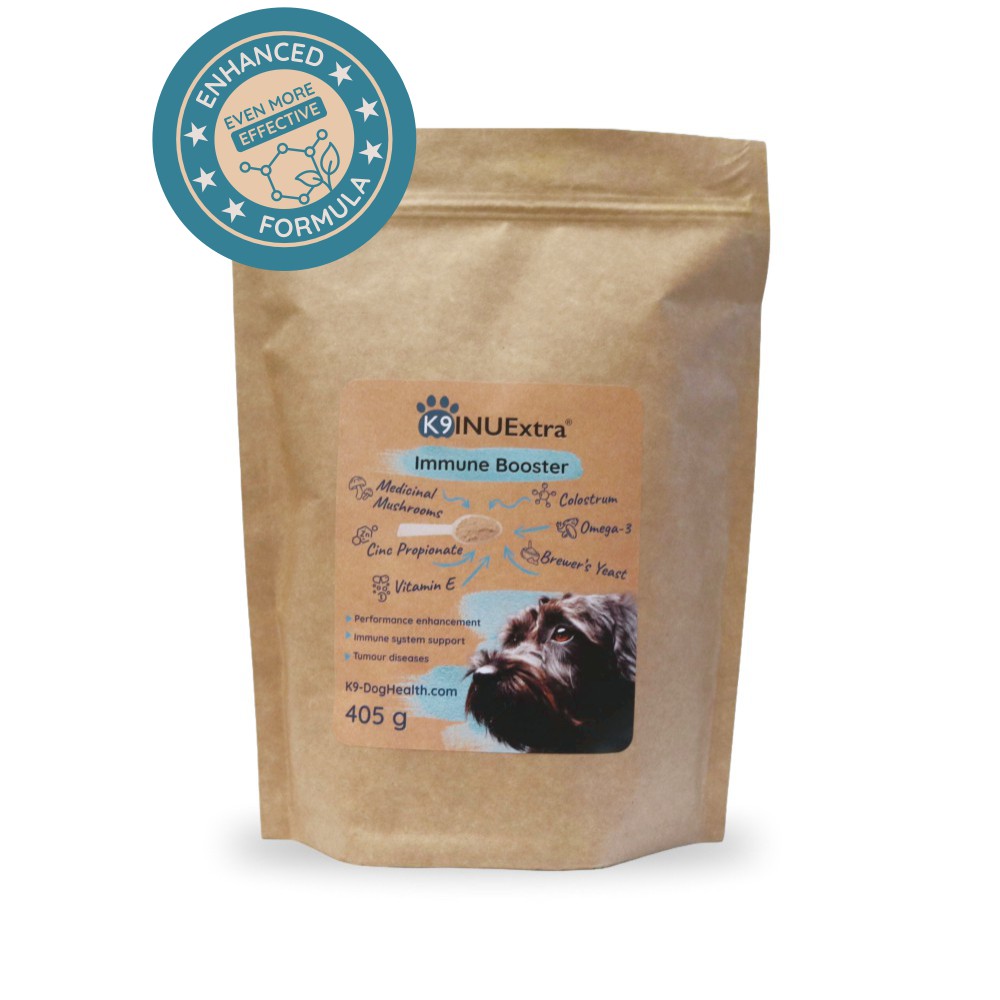

K9 INUExtra®
- Premium immune support with medicinal mushrooms and colostrum
- Anti-inflammatory support with curcumin, omega-3 and BioPerine
- Stronger gut flora and improved digestion with brewer’s yeast and targeted prebiotics
- Antioxidant cellular protection with vitamin E, zinc and natural active compounds
€64,93 (ex.VAT)


Important clarification: if a compound is immunomodulating, it does not mean it “stops cancer without side effects.” An immunomodulating effect means a substance may influence certain regulatory processes of the immune response. It does not mean it directly destroys cancer cells.
Medicinal mushrooms for dogs may work mainly through immune regulation. Bioactive compounds in medicinal mushrooms – such as certain polysaccharides and beta-glucans – may influence parts of the immune response. They do not work through a direct anti-tumor mechanism.
That is why it is essential to stress this: medicinal mushrooms do not cure cancer, and they do not replace veterinary diagnosis or treatment. In some cases, they may still offer complementary support for general condition, recovery, and immune function.
Scientific interest in medicinal mushrooms has grown strongly over the past decades. However, much of the available evidence comes from laboratory (in vitro) studies or human research. You cannot always apply these results directly to dogs. Interpretation therefore requires care.
Medicinal mushrooms for dogs – production
With medicinal mushroom products, a key difference is that potential effects depend not only on the mushroom species, but also on processing. It matters whether the product contains full-spectrum mushroom powder, an extract produced with different extraction methods, or simply ground raw material. Extract quality, the real active-compound content, dose, and how you use the product also play major roles. It also matters whether the product comes from the fruiting body or the mycelium, and whether processing keeps the mushroom’s natural active-compound complex intact or isolates only certain components.
Processing strongly affects the form and proportion in which the mushroom’s natural compounds reach the body. Some methods emphasize specific components, while other approaches aim to keep the full active-compound spectrum together, so it stays closer to how it appears in nature. And in practice, these factors can greatly influence the real amount of beta-glucans and other bioactive compounds, which then affects whether a given medicinal mushrooms for dogs product may offer meaningful complementary support.
Because of this, some pet parents lean toward a full-spectrum approach, especially if they want a broader compound profile than a single isolated extract can offer.
We covered medicinal mushroom production, different extraction methods, and why they matter in more detail here: Medicinal mushroom production – why extraction method matters
Why have medicinal mushrooms become a research focus?


Now that we clarified what the immunomodulating effect of medicinal mushrooms means – and what it does not mean – it helps to understand why these compounds moved into the center of scientific interest. Using medicinal mushrooms is not new: some species have been used for centuries, even millennia, in traditional East Asian medicine as complementary support in different contexts.
Modern research focuses mainly on bioactive compounds in medicinal mushrooms, such as polysaccharides (especially beta-glucans), triterpenes, and other components. Researchers do not study them as direct anti-cancer drugs. They examine them as compounds linked to immune function. The goal is to understand how they may influence immune regulation, recovery processes, or overall balance. Research also explores how these compounds may influence immune cell activity. Dose and extract quality remain key factors.
Some studies suggest that certain medicinal mushroom extracts may offer complementary support for parts of the immune response and overall condition. These findings do not mean universal or guaranteed recovery, especially in veterinary use. That is why we continue by species, and we explain why specific mushrooms may come up in immune support for dogs.
Medicinal mushrooms for dogs and K9 products
(K9 INU®, K9 INUExtra®, K9 INUFactor®, K9 Immunity™, K9 Immunity Plus™, K9 FullFlex™,K9 INUFlex®, K9 INUAllergy®, K9 INUGut®)
Agaricus blazei Murill – almond mushroom

Today, Agaricus blazei appears mainly in immunology-related research contexts. Most findings come from laboratory and human studies, and they suggest that certain extracts may influence specific elements of immune response. However, these results do not prove a direct therapeutic effect, so veterinary use always requires careful interpretation.
In dogs, Agaricus blazei may come up only as a complementary approach, mainly to support general immune function. It is not a stand-alone therapy.
Main bioactive components identified in this mushroom:
- Polysaccharides (especially beta-glucans): these are key compounds studied in immune-related research.
- Sterol-like compounds and other lipid components.
- Lectins and other bioactive compounds present in smaller amounts.
Potential directions studied in the literature for Agaricus blazei:
- complementary immune support,
- research linked to metabolic processes,
- areas related to oxidative stress.
Cordyceps species – caterpillar fungus

In the literature and in modern supplements, two Cordyceps species come up most often: Cordyceps sinensis and Cordyceps militaris. Earlier research focused mainly on Cordyceps sinensis, while today Cordyceps militaris has become more common, because you can cultivate it under controlled conditions. This, in turn, can support more reliable standardization of active compounds.
With Cordyceps species, scientific interest centers mainly on bioactive compounds, especially cordycepin and certain polysaccharides. For this reason, studies often discuss these components in relation to immune function, cellular metabolism, and stress adaptation. Most available data comes from laboratory (in vitro) and human research.
Main areas studied for Cordyceps sinensis and Cordyceps militaris:
- mechanisms linked to regulation of parts of immune response,
- cellular energy balance and metabolic processes,
- research linked to oxidative stress and recovery.
Our products contain both Cordyceps sinensis and Cordyceps militaris extracts, sourced from controlled suppliers and processed appropriately. In dogs, these do not replace veterinary diagnosis or treatment. Consult a professional before use.
Ganoderma lucidum – reishi

In modern literature, Ganoderma lucidum appears mainly in immune-related research directions. At the same time, researchers describe polysaccharides (especially beta-glucans), triterpenes, and other bioactive compounds as the main focus areas. Most available data comes from laboratory (in vitro) and human studies, which means these findings always require careful interpretation in a veterinary context.
Main research areas for Ganoderma lucidum:
- mechanisms linked to regulation of parts of immune response,
- oxidative stress and cellular protection research,
- directions linked to metabolic processes.
Processing and extraction strongly influence the active-compound profile of reishi products. That is why extract type and quality matter most when you evaluate potential use.
We also covered reishi processing and use considerations in a separate, detailed article: Ganoderma lucidum (reishi) for dogs – effects, processing, and key considerations.
Shiitake – Lentinula edodes

Modern scientific interest focuses mainly on complex carbohydrates and polysaccharides, especially lentinan. Research has examined these mostly in laboratory (in vitro) and human studies. These studies explore directions linked to immune function.
Lentinan research often focuses on mechanisms linked to immune cell activity and immune regulation, including macrophage function. These findings do not count as a direct therapeutic effect. Veterinary interpretation requires care.
Maitake – Grifola frondosa (hen of the woods)

Research on Grifola frondosa focuses mainly on polysaccharides, especially beta-glucans, and certain sterol-like compounds. Studies have examined these mostly in laboratory (in vitro) and human studies. Researchers often connect findings with immune function and metabolic processes.
In the literature, maitake often appears in work related to immune regulation and research linked to carbohydrate and lipid metabolism. These findings do not prove disease treatment. They also do not count as direct therapeutic effects.
In dogs, Grifola frondosa may come up only as a complementary approach. It is discussed mainly in the context of general immune support and research directions linked to metabolism. It is not a stand-alone therapy.
Turkey tail mushroom – Trametes versicolor

Research often focuses on two well known bioactive compounds: polysaccharide-K (PSK) and polysaccharopeptide (PSP). Most data comes from laboratory (in vitro) and human research. Findings are often discussed in the context of immune regulation and immune cell activity.
In the literature, turkey tail mushroom research commonly includes:
- mechanisms linked to immune cell function and activation,
- polysaccharide-based immunomodulation processes,
- research linked to the body’s stress adaptation and resilience.
We also cover Trametes versicolor (turkey tail mushroom) compounds, extracts, and immune context in a separate article. It includes PSK and PSP background, processing relevance, and key use considerations: Turkey tail mushroom for dogs – effects, research, and key considerations.
Medicinal mushrooms for dogs – lion’s mane – Hericium erinaceus

Research on Hericium erinaceus focuses mainly on erinacines and hericenones. Studies have examined these mostly in laboratory (in vitro) and human research. Researchers discuss them mainly in the context of nervous system function, neurotrophic factor regulation, and communication between nerve cells.
The literature also includes immune-related research on lion’s mane. These studies examine the mushroom’s polysaccharides and other bioactive compounds in relation to immune response. These findings do not prove disease treatment. They also do not count as direct therapeutic effects.
In dogs, Hericium erinaceus may come up only as a complementary approach. It is discussed mainly in the context of nervous system research directions and general immune support. It is not a stand-alone therapy.
We also cover lion’s mane (Hericium erinaceus) compounds, nervous system and immune-related directions, plus processing and key use considerations in a separate article: Lion’s mane (Hericium erinaceus) – effects, research, and key considerations.
Medicinal mushrooms for dogs – frequently asked questions
❓ Are medicinal mushrooms for dogs safe?
Medicinal mushrooms for dogs are generally considered safe when they come from a controlled source and have appropriate processing. Still, they may not fit every situation. With illness, medication use, chemotherapy, or autoimmune issues, consult your veterinarian in every case.
❓ Which medicinal mushroom is best for immune support?
There is no single best medicinal mushroom for every dog and every situation. Immune support depends on your dog’s age, condition, and overall load, as well as extract quality and active-compound content.
❓ Can I give medicinal mushrooms to a dog with cancer?
In dogs, medicinal mushrooms may come up only as a complementary approach. They do not replace veterinary treatment. With cancer, veterinary guidance is especially important, because the treatment plan and medications can affect what fits.
❓ What does immunomodulating effect mean with medicinal mushrooms?
Immunomodulating effect means certain compounds – such as beta-glucans and polysaccharides – may influence specific regulatory processes of immune response. This is not the same as direct anti-cancer or curative action.
❓ What is the difference between mushroom powder and medicinal mushroom extract?
Mushroom powder is the ground whole mushroom, while an extract can concentrate certain compounds through a specific process. Potential effects depend not only on the species, but also on processing, fruiting body vs mycelium content, and real active-compound levels.
❓ How long until I may notice an effect?
This varies by individual. For general immune support, 2-4 weeks is often needed. In some cases, changes become noticeable after 6-8 weeks of consistent use.
❓ Can medicinal mushrooms cause side effects?
Rarely, mild digestive reactions may occur, such as softer stool or gas. Start with a low dose, then increase gradually. Watch your dog’s individual response.
❓ Can my dog take medicinal mushrooms alongside medications?
With medications, chemotherapy, or immune-related treatment, veterinary guidance is always needed. Medicinal mushrooms for dogs can influence immune response.
❓ What should I look for when choosing medicinal mushrooms for dogs?
Look for controlled sourcing, transparent composition, appropriate processing, and documented active-compound content. Never give wild-picked or unknown-origin mushrooms to your dog.
Important:
This article on medicinal mushrooms for dogs is for informational purposes only and does not replace a veterinary exam or treatment. For an accurate diagnosis and a suitable treatment plan, always ask your veterinarian for guidance.
References:
- Mizuno, T. (1999). The extraction and development of antitumor-active polysaccharides from medicinal mushrooms in Japan (Review). International Journal of Medicinal Mushrooms, 1(1), 9-29.
- Tuli, H. S., Sandhu, S. S., & Sharma, A. K. (2014). Pharmacological and therapeutic potential of Cordyceps with special reference to cordycepin. 3 Biotech, 4(1), 1-12.
- Bishop, K. S., Kao, C. H. J., Xu, Y., Glucina, M. P., Paterson, R. R. M., & Ferguson, L. R. (2015). From 2000 years of Ganoderma lucidum to recent developments in nutraceuticals. Phytochemistry, 114, 56-65.
- Wasser, S. P. (2011). Current findings, future trends, and unsolved problems in studies of medicinal mushrooms. Applied Microbiology and Biotechnology, 89(5), 1323-1332.
- Elizárraga, M. L., & Wasser, S. P. (2017). Medicinal mushrooms: Trametes versicolor. International Journal of Medicinal Mushrooms, 19(9), 735-746.
- Deng, G., Lin, H., Seidman, A., Fornier, M., D’Andrea, G., Wesa, K., Yeung, S., Cunningham-Rundles, S., & Cassileth, B. R. (2009). A phase I/II trial of a polysaccharide extract from Grifola frondosa (Maitake mushroom) in breast cancer patients: Immunological effects. Cancer Immunology, Immunotherapy, 58, 1595-1603.
- Wu, J.-Y., Siu, K.-C., Geng, P., & Wang, X. (2021). Bioactive ingredients and medicinal values of Grifola frondosa (Maitake). Foods, 10(1), 95.
- Mori, K., Inatomi, S., Ouchi, K., Azumi, Y., & Tuchida, T. (2009). Improving effects of the mushroom Yamabushitake (Hericium erinaceus) on mild cognitive impairment: A double-blind placebo-controlled clinical trial. Phytotherapy Research, 23(3), 367-372.

